
Grant Parish Sex Offender Checks
The Louisiana State Sex Offender and Child Predator Registry, managed by Louisiana State Police Bureau of Criminal Identification and Information, is the controlling public search for Grant Parish. Visitors must read and accept the registry conditions before reaching search tools. Louisiana State Police also cautions that responsible local agencies supply much of the data. The state system aggregates those reports but does not have sole control over each item.
Begin with a name when you know whom you mean. Use the city, parish, ZIP, address, map, or available distance controls for place-based awareness, but do not invent certainty from a map point. Match several facts before deciding that a result refers to the right person. The Grant Parish Sheriff handles local registration and can explain where a registrant reports. The sheriff is also the proper local contact when published information appears stale or noncompliance is suspected.
The official registry entry screen is shown in this Louisiana registry source.
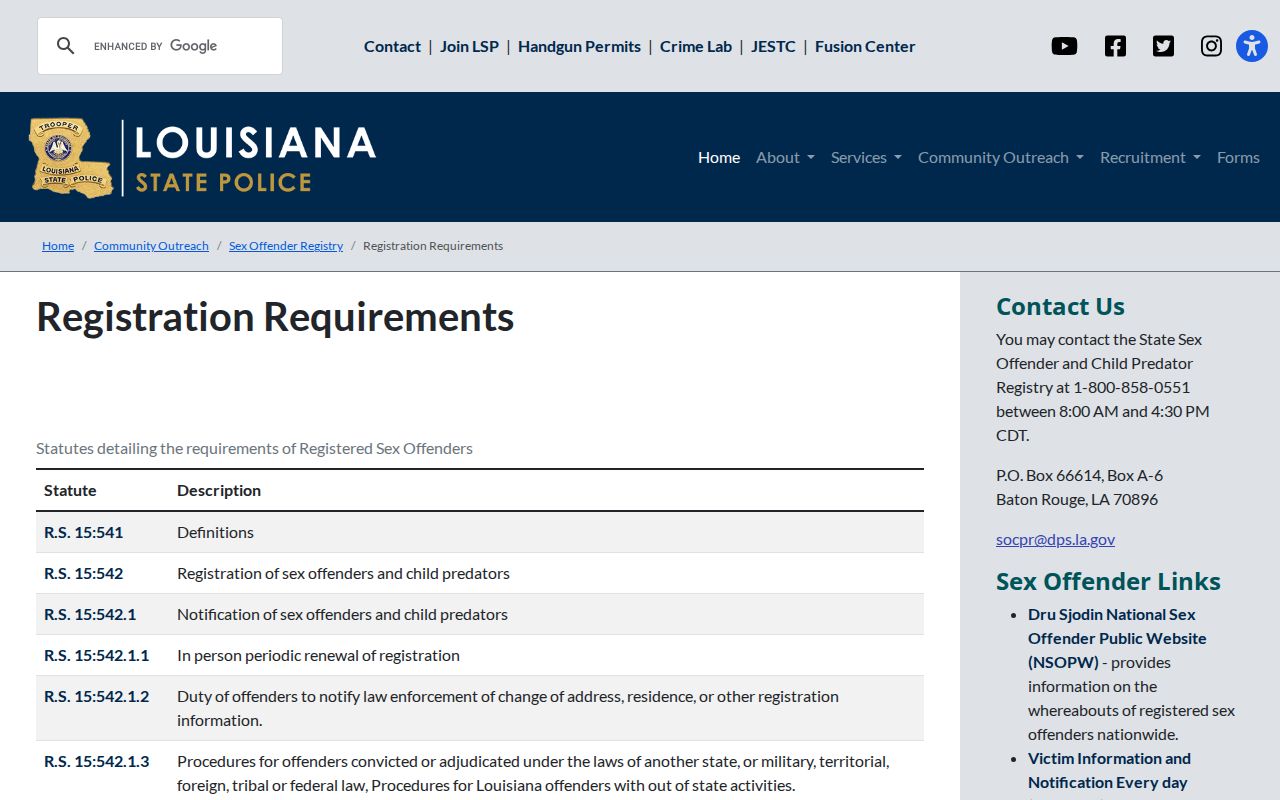
That entry point matters because acceptance of Louisiana's conditions comes before any Grant Parish registry results.
Grant Parish Name or Address
Name and location searches answer different questions. A Grant Parish name search is best when enough identifiers are known to distinguish one person from another. Spelling, aliases, and physical details can matter. A geographic search is designed for community awareness around a street, town, parish, or ZIP code. It may return more records, and each result still needs individual review.
| Search route | Useful when | Main caution |
|---|---|---|
| Name | You know a person's name or alias | Confirm photo, description, and offense details |
| City, parish, or ZIP | You are checking a broad Grant Parish area | Boundaries and reported locations can change |
| Address or map | You need proximity-based awareness | A plotted address is not real-time tracking |
A failed name search is not proof that no record exists. Try known aliases and confirm the spelling. If a place search produces too many results, narrow only with controls the registry offers. Exact radius choices were not visible in the indexed conditions page and should be read from the live interface.
Louisiana Registry Searches
The state registry should be searched methodically. Its public controls commonly support identity and geographic routes, and the live screen controls which fields are available after acceptance. Do not enter more personal data than the official form asks for.
- Open the official Louisiana registry and read the conditions of use.
- Accept the conditions, then choose a name or location-based search.
- Enter the known fields, select Grant Parish when available, and review the result list.
- Open a likely profile and compare multiple identifiers before relying on the match.
| Field | Type | Required | Use |
|---|---|---|---|
| Name | Text | Depends on route | Search a known person or alias |
| City, parish, or ZIP | Text or selection | No | Limit results to a Louisiana area |
| Address | Text | No | Run an available proximity search |
| Map or list display | Display control | No | Review geographic results |
The statute behind registration duties is available from the Louisiana Legislature's R.S. 15:542 page.
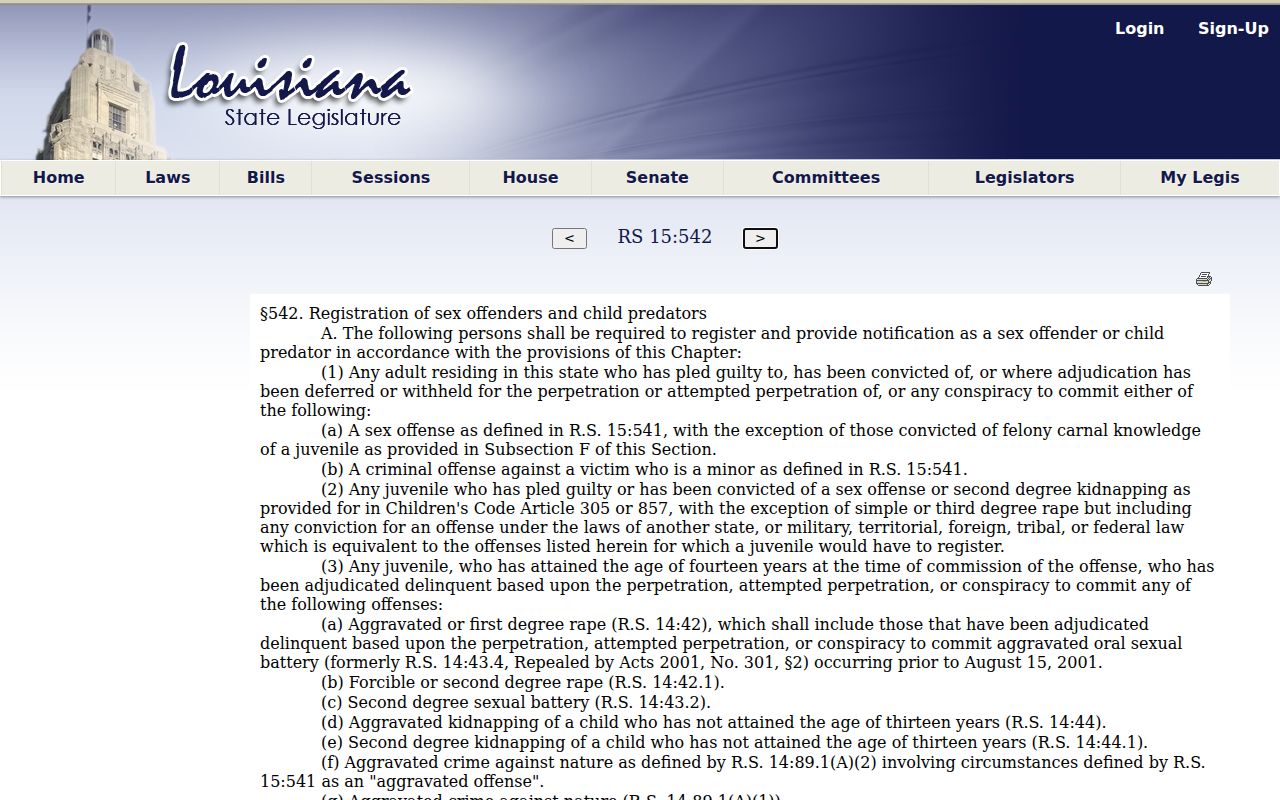
The law source helps separate a public search feature from the duties that create and update registry records.
Reported Addresses Can Lag
A registry address is reported information. It should not be treated as proof that someone stands at that location now. Moves, agency processing, data transmission, and a person's failure to comply can all affect what appears. Louisiana State Police expressly describes the registry as an aggregation of reports from responsible agencies, which is why the agency named on a profile matters.
If a Grant Parish profile appears outdated, save the non-sensitive facts needed to identify the entry and contact the responsible agency. Do not confront the person at the listed address. For a local registration question, call the Grant Parish Sheriff at 318-627-2035. Report an emergency to 911. A suspected error is a reason to seek official review, not to broadcast an accusation.
When calling, explain whether the concern involves a possible move, a status label, or a mismatch in identifying data. Give the profile name and the responsible agency shown on the record. The sheriff or State Police can decide what can be checked or corrected. A caller should not try to investigate by visiting a home, workplace, or school. That approach risks harm and does not establish whether the registry report is wrong.
Registry Profiles: What They Show
Louisiana publishes selected information for safety awareness. A profile may include identity, appearance, reported location, the offense that triggers registration, registration dates, and compliance information. Some fields appear only where state law authorizes their release. Read the record as a whole rather than focusing on a photograph or map marker.
| Name and aliases | Published names that help distinguish identity and spelling variations. |
|---|---|
| Photo and description | A photograph plus physical traits and, where published, scars, marks, or tattoos. |
| Residence or location | The address or location reported and releasable under law, not live tracking. |
| Qualifying offense | Offense, statute or jurisdiction, and available conviction details. |
| Other published ties | Employer, school, or vehicle information when the statute permits publication. |
| Status and agency | Registration or compliance status, registration dates, and responsible contact. |
Use the profile's responsible-agency field for questions about a specific entry. Never infer a new offense from a status label alone.
Grant Sheriff Registration Role
Grant Parish registration and local verification begin with the Grant Parish Sheriff's Office at 205 Cypress Street in Colfax. Call 318-627-2035 for appointment and location instructions. The sheriff has not posted a dedicated registration-office schedule or fee in the reviewed sources, so confirm those points before traveling. Do not assume the general office schedule applies to a registration appointment.
Louisiana law assigns local agencies a time-sensitive role. Under R.S. 15:542, covered people must complete in-person registration within three business days in specified circumstances. R.S. 15:545 directs sheriffs and police chiefs to fingerprint covered registrants and forward the required information to BCII within three business days. The official local transmission statute shows that process.
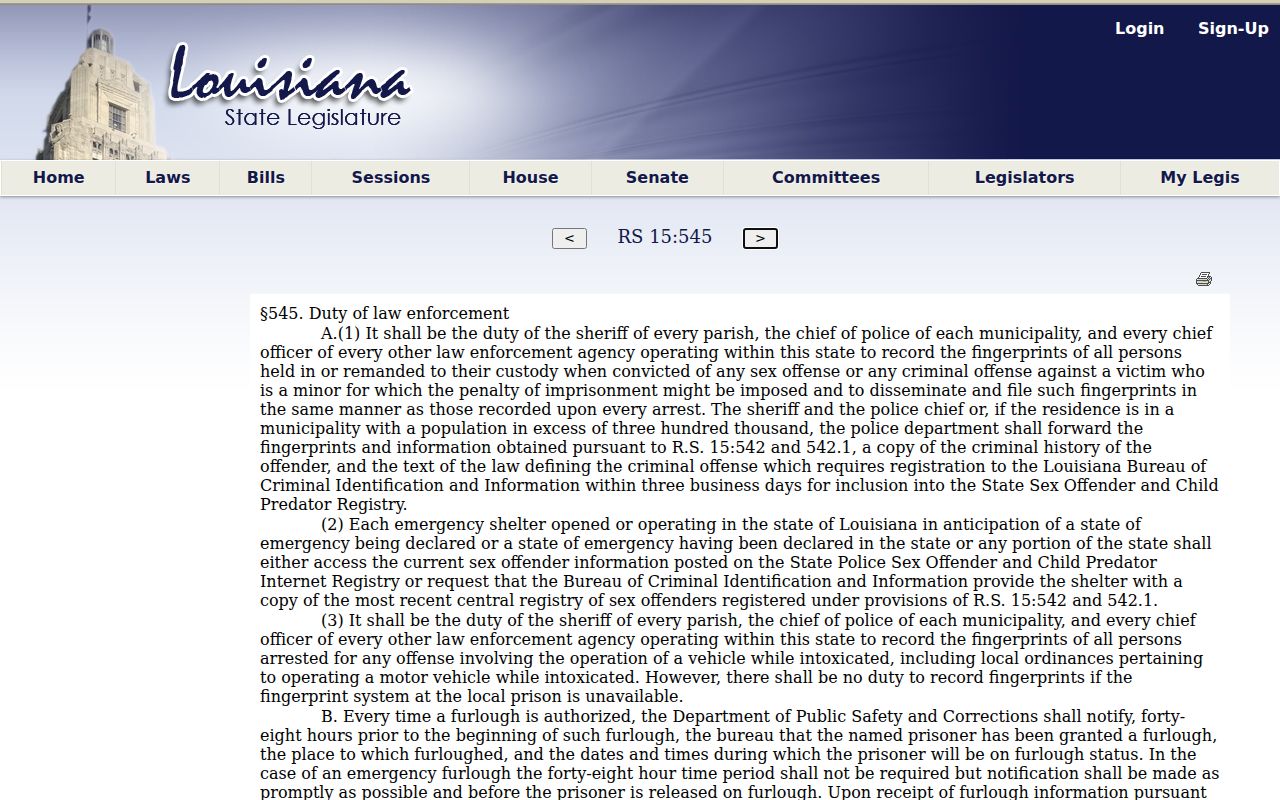
This local-to-state handoff explains why the sheriff and Louisiana State Police may both be relevant to one Grant Parish record.
Registration Levels and Duties in Louisiana
Louisiana uses statutory registration periods rather than a simple public ranking that predicts risk. The qualifying offense and other legal facts determine whether the period is 15 years, 25 years, or life. Time and compliance rules affect each category. A court process is required for any reduction the law allows.
| Louisiana period | Core rule | Important qualification |
|---|---|---|
| 15 years | Baseline statutory category | May be reduced to 10 after the required clean-record period, treatment proof, and court process under subsection E |
| 25 years | Specified offenses involving minors and other listed categories | Statutory time and compliance requirements apply |
| Lifetime | Enumerated serious or repeat categories | A narrow juvenile-related reduction process may apply |
The official R.S. 15:544 text controls the duration rules.
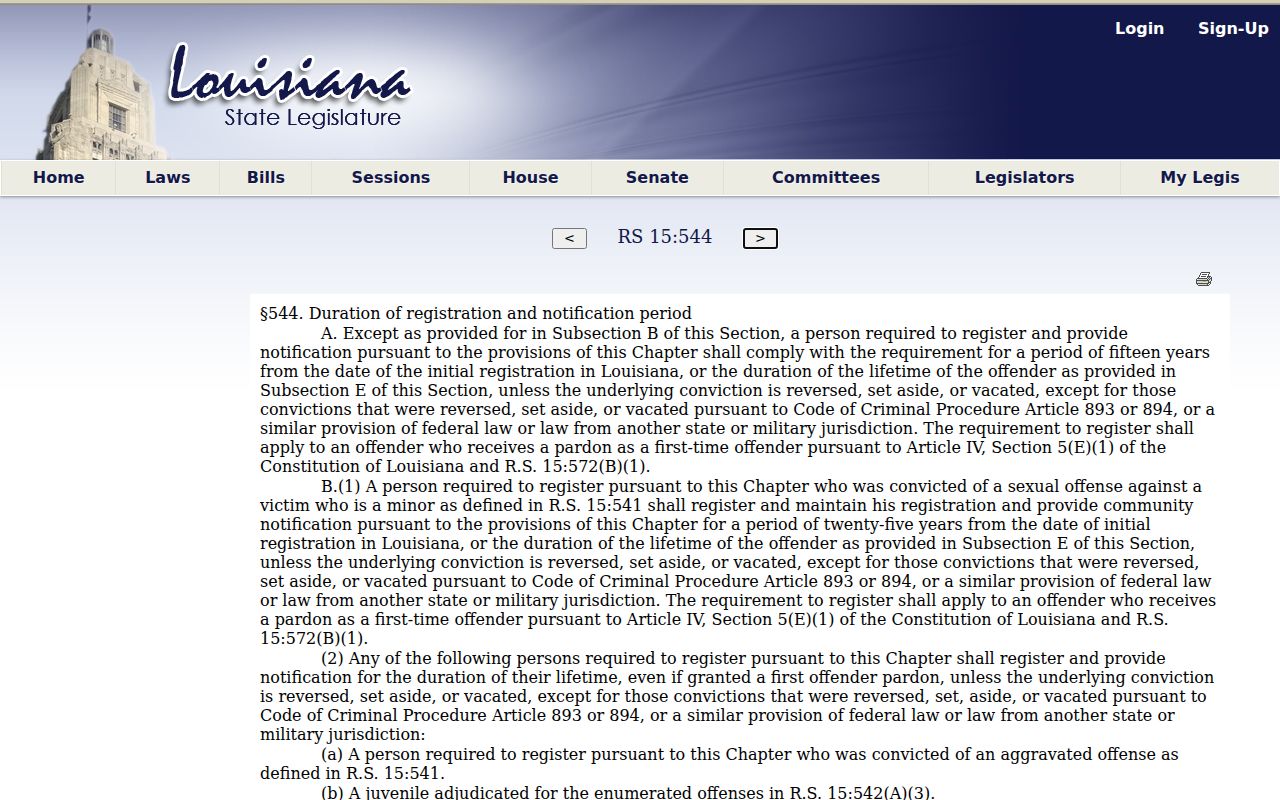
The statute supplies the details that a short registry status line cannot fully explain.
NSOPW Across State Lines
The Dru Sjodin National Sex Offender Public Website is useful when a search crosses Louisiana's border or the relevant state is uncertain. It searches participating public registries through one national entry point. NSOPW is a supplement, not a replacement for the Louisiana source or the Grant Parish Sheriff's local role.
The national interface is documented in the official NSOPW source.
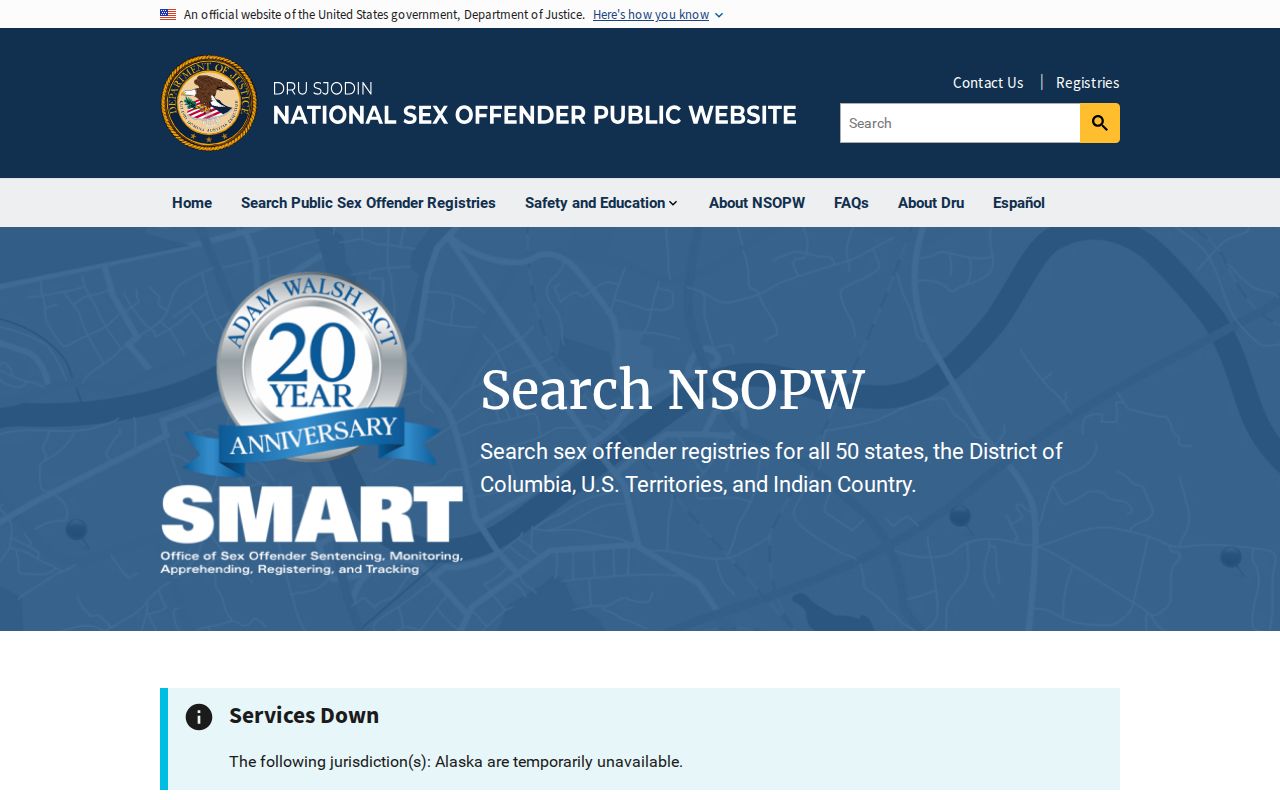
For a Louisiana result, return to the state profile and its responsible-agency contact to verify details.
National results can differ in layout because each participating jurisdiction decides what its law makes public. A missing field on NSOPW does not mean Louisiana lacks the underlying record. Likewise, a national match does not replace the Louisiana profile's current status, offense detail, or agency contact. For someone connected to Grant Parish, use NSOPW to locate the state source, then complete the review through Louisiana's registry.
Three-Day Reporting Duties
The three-business-day rules are part of a record flow, not a promise that every public screen changes at once. A covered person registers in person when the statute requires it. The sheriff or police chief takes fingerprints and sends data to BCII. Louisiana State Police then maintains the state-level registry built from agency reports.
Several events may trigger duties under the statute, so readers should avoid guessing about compliance from a single date. Registration dates and public status fields provide context, but only the responsible agency can confirm whether a report is pending, late, under review, or complete. This distinction is vital when someone believes an address or status changed recently.
An LSP civil agency agreement illustrates how tightly state criminal-information access is governed.
The agreement is not a public registry search form, but it shows why authorized criminal-information channels and the public registry should not be confused.
Using Registry Information Lawfully
Registry information supports personal, family, and community safety. It does not authorize confrontation, harassment, threats, intimidation, discrimination, or vigilante conduct. Share an urgent safety concern with law enforcement. Send suspected noncompliance in Grant Parish to the sheriff or Louisiana State Police, and give the agency enough profile information to locate the entry without spreading private claims.
Use the registry lawfully. Misusing registry information to harass, threaten, intimidate, or take unlawful action is a crime. R.S. 15:542 governs Louisiana registration duties and the official registry conditions restrict misuse.
Do not treat a listing as permission to exclude someone from a lawful service or to act against a household member. The registry is a public-safety reference. Official agencies investigate compliance and correct source data.