
Montgomery Criminal History Checks
Start with the record type and the agency name on a citation, booking entry, or other notice. A Montgomery town officer or marshal, the Grant Parish Sheriff's Office, and Louisiana State Police each keep their own incident material. The Grant Parish Detention Facility creates the booking record. The Grant Parish Clerk of Court keeps a filed Thirty-Fifth Judicial District Court case. Louisiana State Police BCII maintains the fingerprint-supported statewide repository.
- Identify whether Montgomery town personnel, Grant Sheriff, or Louisiana State Police handled the event.
- Ask that agency's custodian for the incident or arrest report, using the date, place, and report number when known.
- Contact the Montgomery town custodian for a local ordinance, traffic, or other municipal file that may remain local.
- Use Grant detention for booking status and the Grant Clerk for a filed 35th JDC case or certified disposition.
- Use BCII Right to Review with fingerprints when examining your own full Louisiana repository record.
Which Agency Made the Montgomery Arrest?
The arresting-agency field is the fastest routing clue. Grant Parish research identifies town police or marshal functions, Grant Sheriff, Louisiana State Police, wildlife enforcement, and federal agencies as possible sources. The fact that a person was booked at the parish facility does not make the sheriff the owner of every police narrative. Jail staff hold the intake record, while the agency whose officer responded generally holds the incident or arrest report.
If the agency label is unclear, call Grant detention and ask whether the public booking entry identifies it. Then contact the named source. A focused request should state the event date and time, location, report or booking number, subject name needed to locate the file, and the exact portions sought. Ask for an electronic copy and an advance estimate when those options are available.
Records at the Montgomery Police Department
No official Montgomery police-records portal, public blotter, mobile app, fillable request form, or searchable case interface was confirmed. Nor was a reliable municipal website found for publishing a specific police address, telephone number, staff name, or office hours. The safe route is to identify the current town records custodian through an official Louisiana or local-government directory before sending personal details or traveling.
Ask whether the record was created by town police, a marshal, the sheriff, or LSP. If it is a town report, request the custodian's preferred submission method. If Grant deputies handled it, use the Grant Parish Sheriff's Office contact channel, call 318-627-2035, and ask for the records custodian. An LSP-created report must go to LSP. There is no parish-wide pool containing every Montgomery police report.
Montgomery Records Without an Online Portal
A missing web result does not prove that no Montgomery record exists. It only shows that the query did not return one in that source. Telephone verification is useful before mailing a request or driving from northern Grant Parish to Colfax. Confirm the custodian, accepted delivery method, copy cost, and whether an older file needs an archive search.
For a town document, begin with a verified town-government contact. For sheriff material, telephone 318-627-2035 or write to P.O. Box 187, Colfax, LA 71417. State that the request is made under Louisiana Public Records Law. Narrow requests work best. List separate items such as a report, CAD log, 911 audio, photographs, or body-camera footage because retention, redaction, and reproduction can differ. Commercial people-search sites are not substitutes for official custodians.
Booking and Arrest Records in Montgomery
The research does not establish that Montgomery operates a city jail. Do not infer one. A person entering Grant Parish Detention receives a booking record at 485 Richardson Drive in Colfax. For current custody, try the official sheriff-hosted roster if it is working, then call 318-627-3261 or 318-627-3724. Both numbers appear in official-source directories.
A booking entry may contain a booking number and date, arresting agency, preliminary charge, bond, photograph, custody status, and release information. It is a snapshot, not a judgment. The prosecutor may later amend or decline the officer's charge. For more detail about intake and custody routes, see the Grant Parish arrest search. After a transfer to state custody or supervision, LA VINE becomes the appropriate statewide channel.
Montgomery Booking and Case Numbers Differ
A booking number identifies a jail intake. A docket number identifies a court prosecution. One Montgomery arrest can lead to several counts, a different filed charge, or no filed charge at all. Keep both numbers when tracing the same event. They allow the detention staff and clerk to locate records without forcing a broad name search.
The court file must be read at count level. Check the filed statute, minute entries, plea, disposition, judgment, and sentence. “Released” means only that the person is no longer held on that booking. “Closed” can be an administrative label. A dismissal ends a charge without conviction, but it does not automatically erase the earlier booking. A certified court disposition is the strongest record of the filed outcome.
The Montgomery Municipal Court File
A low-level ordinance or traffic matter may stay with Montgomery's local court or town custodian. A filed felony belongs in the 35th JDC regardless of where in Montgomery the arrest occurred. No official public Montgomery docket portal was verified, so call a confirmed town contact and ask who keeps the local file. Do not assume the Grant Clerk has a municipal citation merely because the clerk maintains parish district cases.
| Court Name | Montgomery local or municipal custodian; confirm the current office through official government directories |
|---|---|
| Case Types Heard | Potential ordinance, traffic, and other legally assigned local matters; verify jurisdiction for the specific citation |
| Case Lookup Channel | Telephone, mail, or custodian inquiry by citation, name, or local number; no verified public online docket |
| What the Docket Shows | Ask for the charge or ordinance, event dates, plea, judgment, amounts due, and final status |
| Copies & Fees | Confirm availability, certification, delivery method, and current cost before ordering |
From Montgomery to the Colfax Clerk
Once prosecutors file a Montgomery-related felony or other district case, the Grant Parish Clerk becomes the authoritative source for the court record. Call 318-627-3246 before making the trip. The clerk lists weekday hours of 8:30 a.m. to 4:30 p.m., except legal holidays, and accepts mail at P.O. Box 263, Colfax, LA 71417. Ask for the exact document needed, such as the bill of information, indictment, latest minute, judgment, sentence, dismissal, or certified disposition.
Start with the docket number when possible. Otherwise, use the defendant-name route and compare permitted identifiers, charge, and dates. For an older or non-digitized matter, request a manual or archive search. Ask separately about search, plain-copy, certified-copy, and retrieval charges. The clerk certifies court outcomes, but it cannot supply the arresting officer's narrative merely because prosecution followed.
How Montgomery Records Reach the County
The responding agency creates incident and arrest material. If a person is taken to Grant detention, staff create a separate intake record, photograph, fingerprint submission, and booking number. A prosecutor's later filing creates the 35th JDC docket. Courts and justice agencies report qualifying dispositions to BCII, but update timing and identifier mismatches can leave systems temporarily out of sync.
Record flow: Montgomery arresting agency › Grant Parish courts › Louisiana State Police BCII
For recent events, begin with the agency and jail. For a filed result, use the clerk. For your own statewide fingerprint-supported history, use BCII Right to Review. The official LSP criminal-history authorization form shows the identifying and authorization fields used in an official state process.
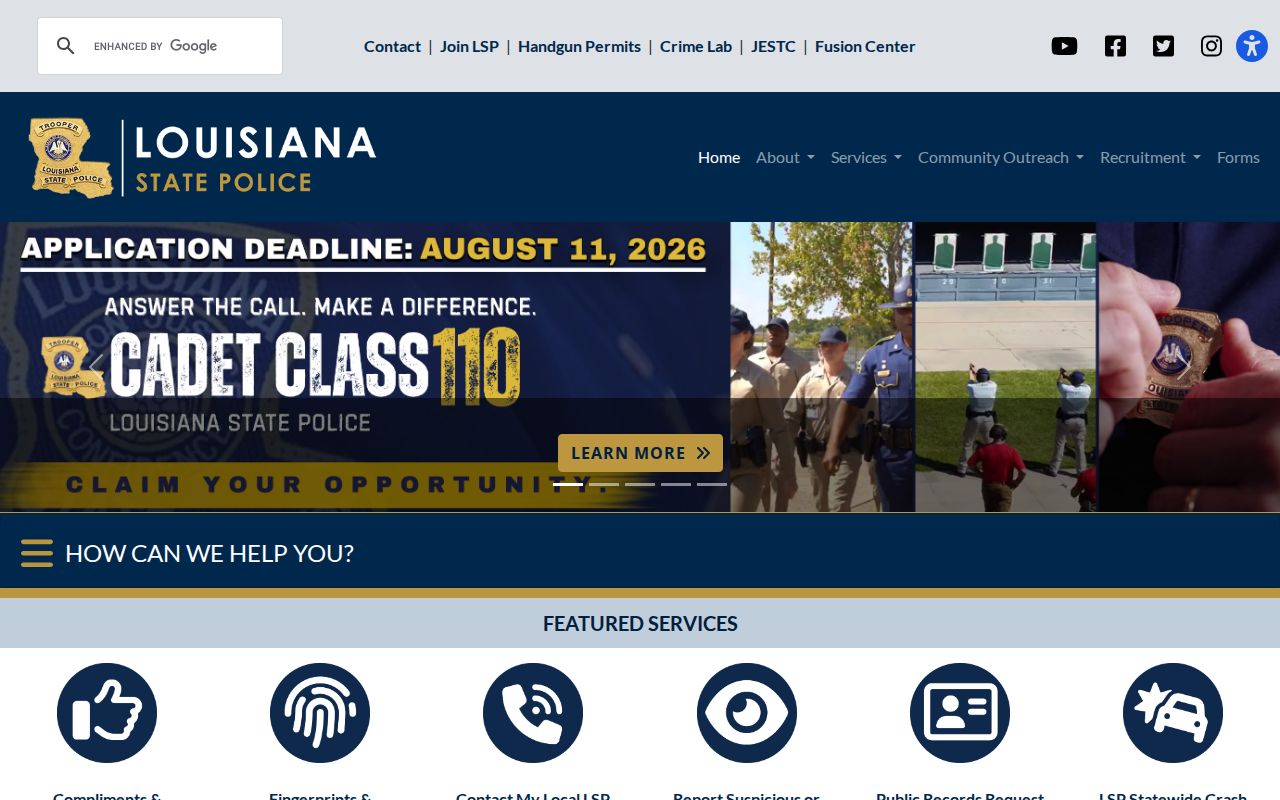
The form reinforces that a fingerprint-supported state check is a different product from a Montgomery report, parish booking, or clerk name search.
Montgomery Records After State Transfer
A release from Grant detention does not show that a case ended. It may mean release on bond, transfer, or another custody change. LA VINE covers Louisiana state custody and community supervision and is reported by DPS&C as updating daily. The DPS&C telephone locator can also answer state-custody questions when the caller has the required identifying information.
The official DPS&C probation and parole directory identifies the office structure that serves Grant Parish.
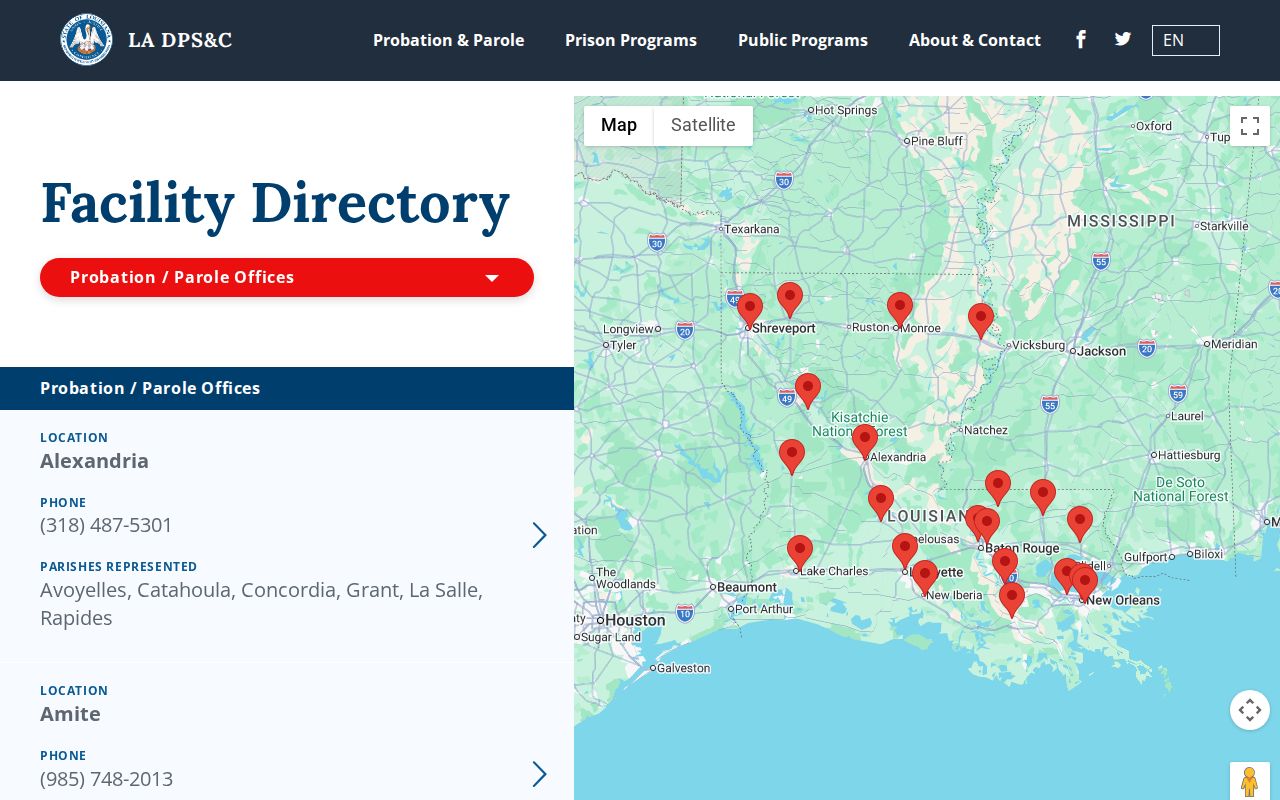
Grant Parish falls under the Alexandria District. Court minutes show whether probation was imposed, while DPS&C and LA VINE address current state supervision.
Certified Montgomery Case Outcomes
A one-line portal status may omit key details. Request the signed judgment, dismissal, or latest minute when proof of outcome matters. Ask whether each count has its own result and whether an appeal or post-conviction entry changes the apparent finality. The Grant Clerk can certify its court records; the jail and arresting agency cannot certify the court's disposition.
If your own BCII record lacks the certified outcome, preserve the certified court copy and use the state correction route. Systems serve different roles and can update at different times. A jail can show release while the docket remains pending, and a court may show dismissal before BCII associates that result with the arrest cycle.
Montgomery Expungement Is Not Erasure
Louisiana expungement makes qualifying records confidential from ordinary public access, subject to statutory exceptions. It does not mean that each physical and digital copy vanishes at once. Eligibility depends on the exact charge, outcome, history, waiting period, and completion of required terms. Start with every arrest cycle and a certified disposition from the Grant Clerk.
The official misdemeanor expungement law sets the rules and exclusions for qualifying misdemeanor convictions.
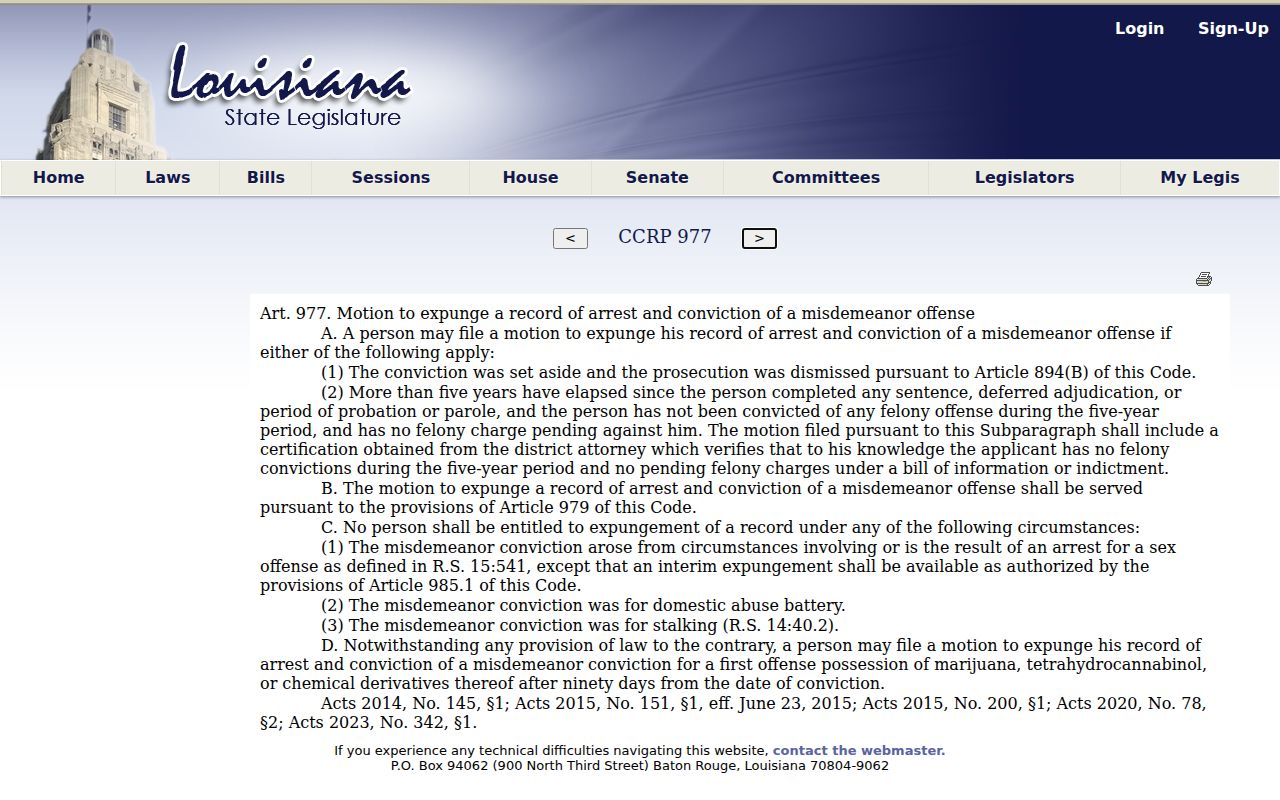
Its conditions must be matched to the actual Montgomery-related docket rather than guessed from a booking caption.
The official felony expungement statute addresses a separate set of eligibility rules and exclusions.
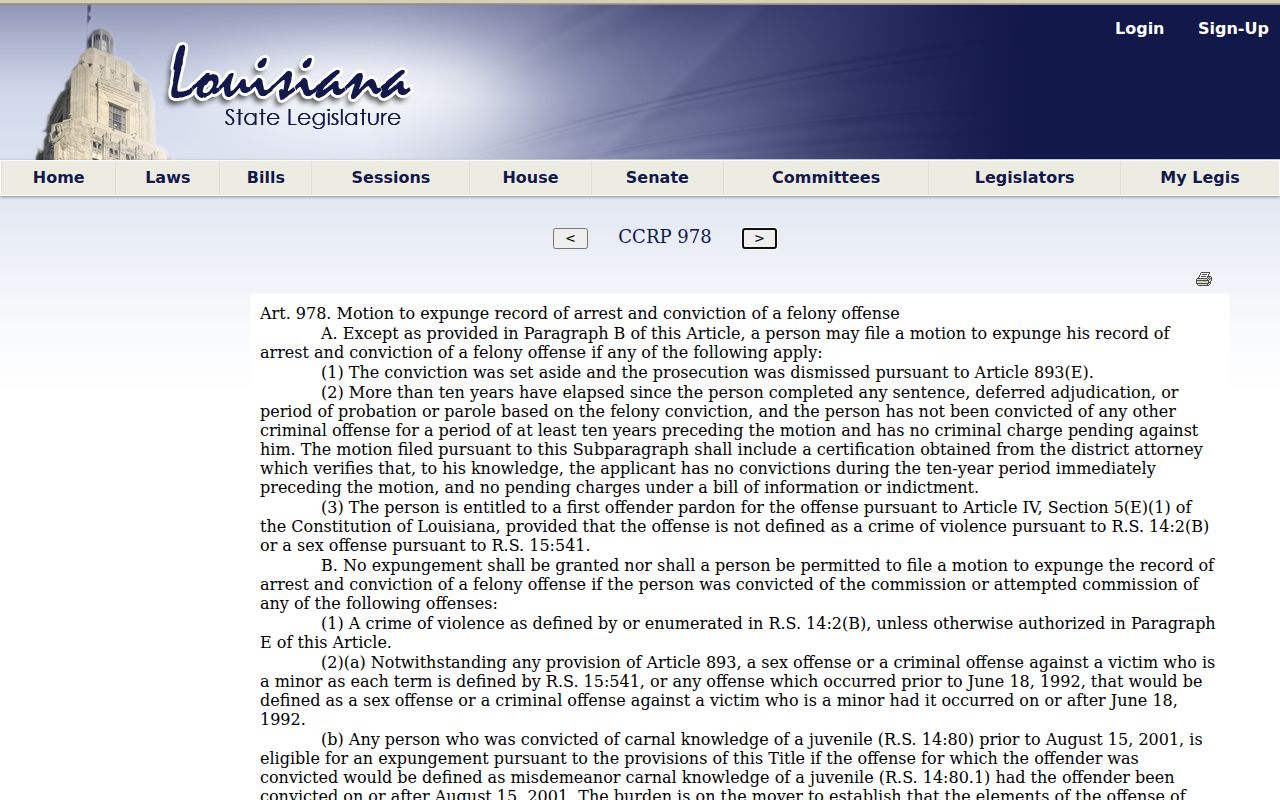
A person should use the precise filed statute and disposition, not a broad felony label, when assessing the form and service requirements.
Finally, Louisiana Code of Criminal Procedure Article 973 describes the legal effect of an expungement order.
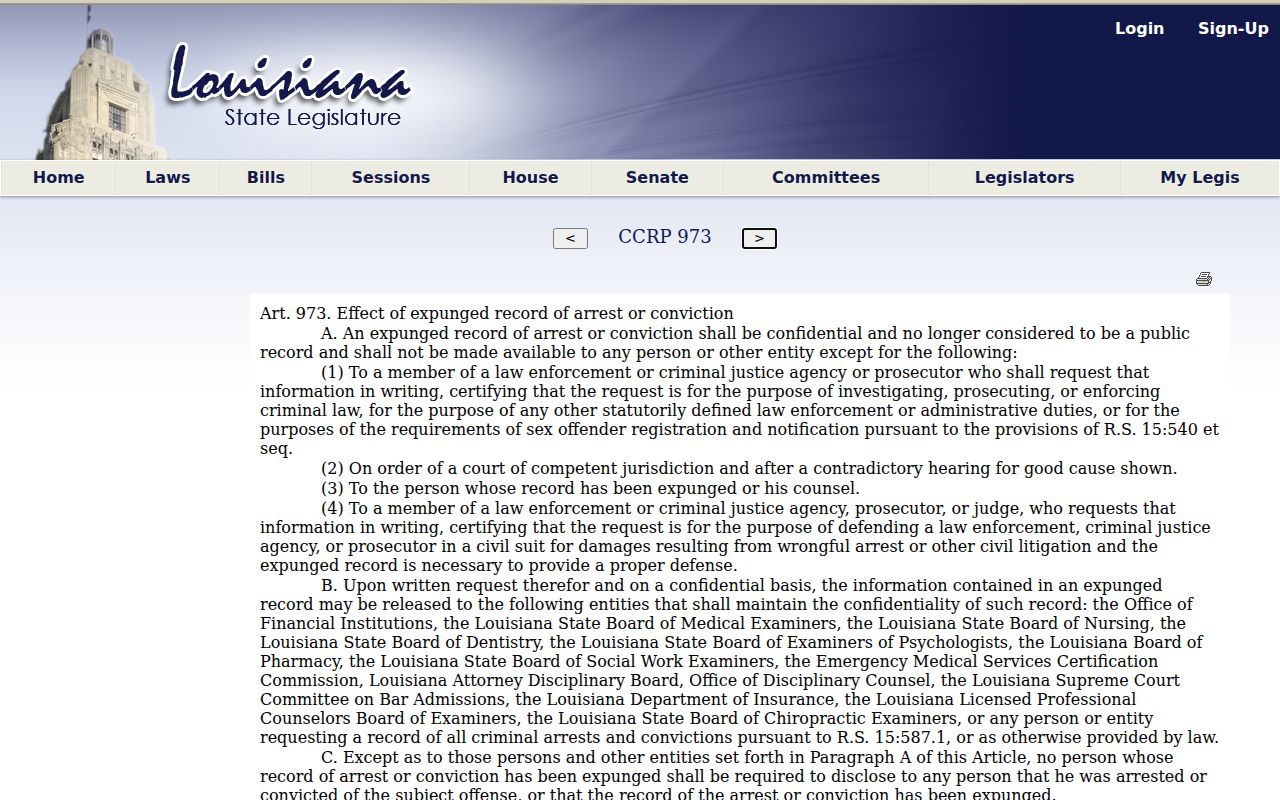
Article 973 explains why a granted order restricts ordinary access while preserving access for specified persons and agencies.
Montgomery Record Access Rules
Louisiana Public Records Law permits inspection and copying of public records subject to custodian procedure and statutory exceptions. A Montgomery town custodian or parish agency may redact active investigative details, juvenile information, victim identifiers, medical facts, personal data, and security material. Expunged records are confidential under Article 973. A request should seek segregable public portions rather than assume the whole file is open or closed.
Repository access follows different rules. R.S. 15:587 governs BCII dissemination and does not create an unrestricted statewide name-search portal. For one's own statewide record, use the official fingerprint-based Right to Review route. For a court file, ask the Grant Clerk. For a report, ask its producing agency.
Key Statutes:
Louisiana Public Records Law, R.S. 44:1 - Defines public records and the custodians responsible for them.
Louisiana R.S. 44:32 - Provides inspection and copying rights subject to exceptions and custodian procedures.
Louisiana C.Cr.P. art. 973 - Makes an expunged record confidential while preserving limited statutory access.